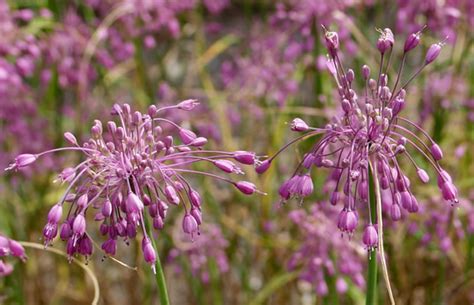
🌿 Keeled Garlic
Gekielter Lauch
Allium carinatum L.
Keeled Garlic (Allium carinatum) is a perennial plant belonging to the amaryllis family (Amaryllidaceae). It is native to parts of Central and Southern Europe and typically grows in nutrient-poor grasslands and other suitable open habitats.
The plant reaches approximately 30 to 60 centimetres in height. Its narrow, keeled leaves resemble grass. Pink to violet flowers appear between June and August. A distinctive feature is the formation of small bulbils within the flower clusters.
Keeled Garlic was traditionally used as a substitute for onions and chives. Its young parts can be added to salads and other dishes for their mild onion-like flavour. Traditional herbal accounts associate the plant with appetite stimulation and digestive support.
Notes
Keeled Garlic contains sulphur-containing compounds, including alliin, as well as flavonoids and volatile constituents.
Historically, the plant was occasionally used as a substitute for leeks and onions. Its juice was also traditionally used to repel moths.
The original source describes Keeled Garlic as a rare, protected plant and advises against collecting it from the wild. Only legally cultivated plants should be used. Its conservation status should be checked according to local regulations.
Effects
- digestive
- appetite-stimulating
Conditions
- digestive complaints
- loss of appetite
Application Areas
- digestion
- gastrointestinal system
- general wellbeing
Plant Parts
- Whole plant
Preparations
- raw